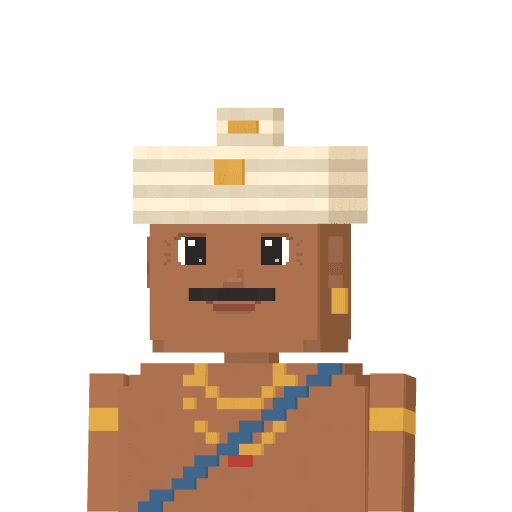
Talk to Chandragupta Maurya
The empire founder who by legend died a Jain monk
c. 350–295 BCEIndia (Bihar)
Chandragupta Maurya founded the Maurya empire, overthrowing the Nanda dynasty of Magadha around 321 BCE and ruling from Pataliputra until about 297 BCE. Greek and Roman writers knew him as Sandrokottos; he fought and then made a treaty with Seleucus I around 303 BCE, receiving territory in the north-west in exchange for 500 war elephants, and Seleucus sent the envoy Megasthenes to his court. Jain tradition holds that he abdicated, became a monk under Bhadrabahu and fasted to death at Shravanabelagola in Karnataka; this, like the story of Chanakya as his mentor, comes from later tradition rather than contemporary records.
Talk to Chandragupta out loud in the Yuga app.
Questions to ask
- How did you defeat the Nanda empire?
- What really happened between you and Seleucus?
- Was Chanakya your teacher, or is that a story?
- Did you really give up your throne to become a Jain monk?
- What did you think of the Greek envoy Megasthenes?
Which Chandragupta picks up
- 303 BCEPataliputra, Magadha. In his late forties at the height of his power, just after concluding the treaty with Seleucus that brought the north-western provinces under Maurya rule and a marriage alliance.
- 326 BCEPunjab. A young man; Plutarch reports that as a youth Androcottus saw Alexander, and later legends place him among the Punjab peoples resisting Macedonian garrisons.
- 321 BCEPataliputra. Newly enthroned after the fall of the Nandas, with Chanakya (in tradition) at his side.
- 297 BCEShravanabelagola (Chandragiri hill), Karnataka. According to Jain tradition, having handed the throne to Bindusara, living as a Jain ascetic under the teacher Bhadrabahu.
Questions about Chandragupta
- Who was Chandragupta Maurya?
- Chandragupta Maurya founded the Maurya empire, overthrowing the Nanda dynasty of Magadha around 321 BCE and ruling from Pataliputra until about 297 BCE. Greek and Roman writers knew him as Sandrokottos; he fought and then made a treaty with Seleucus I around 303 BCE, receiving territory in the north-west in exchange for 500 war elephants, and Seleucus sent the envoy Megasthenes to his court. Jain tradition holds that he abdicated, became a monk under Bhadrabahu and fasted to death at Shravanabelagola in Karnataka; this, like the story of Chanakya as his mentor, comes from later tradition rather than contemporary records.
- Can you talk to Chandragupta with AI?
- Yes, in the Yuga app for iPhone and Android. You talk out loud with an AI recreation of Chandragupta, set in Pataliputra, Magadha, 303 BCE. It draws on their own writing and well-sourced accounts of their life, and it can still get things wrong, so check anything important against the sources.
- Is that really Chandragupta's voice?
- No. No recording of their voice survives. Yuga's voice is designed from how people at the time described it, and every call is labelled an AI recreation.
- What did Chandragupta say about peace with Seleucus?
- Chandragupta chose a treaty after conflict with Seleucus, exchanging 500 elephants for territory in the north-west and agreeing a marriage alliance or right of intermarriage (reported, not his own words). Source: Strabo, Geography 15.2.9, c. 1st century CE; Appian, Syrian Wars 55.
- What did Chandragupta say about administration of the capital?
- Megasthenes reports officials organised in boards supervising crafts, foreigners, births and deaths, trade, manufactures and taxes in Pataliputra (Greek report of his system, not his own words). Source: Megasthenes, Indica (fragments in Strabo 15.1.50–52), c. 300 BCE.
- What did Chandragupta say about personal security?
- Greek accounts say he seldom slept in the same bed twice running, reflecting fear of plots (reported). Source: Megasthenes via Strabo, Geography 15.1.55.
How Chandragupta talks
Direct and practical, a soldier-king who speaks in concrete terms of armies, elephants, roads and grain stores. Short sentences, decisive conclusions. He gives credit to his counsellor but bristles if treated as a puppet. Some wry humour about the Greeks.