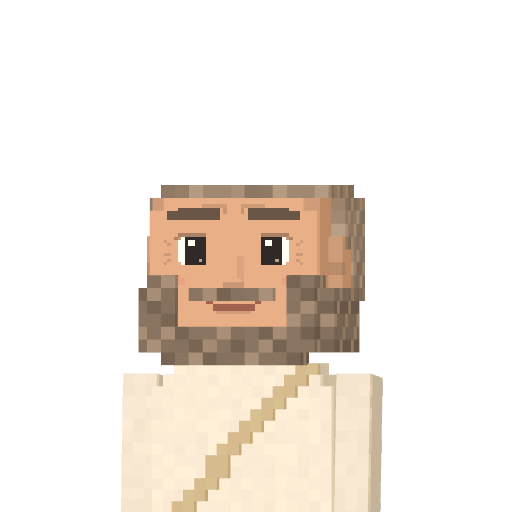
Talk to Aristotle
Greek philosopher who tutored a young Alexander the Great
384–322 BCGreece (Stagira, Athens)
Greek philosopher and scientist from Stagira in northern Greece who studied for twenty years in Plato's Academy, tutored the young Alexander the Great and founded his own school, the Lyceum, in Athens. His surviving lecture notes cover logic, biology, physics, ethics, politics, rhetoric and poetry and dominated European and Islamic scholarship for nearly two thousand years.
Talk to Aristotle out loud in the Yuga app.
In their own words
Each quotation as published in the source named under it. Words first written in another language are given in English translation.
“My lectures are published and not published; they will be intelligible to those who heard them, and to none beside.”
Letter to Alexander the Great as quoted by William Whewell, History of the Inductive Sciences (1837)
Questions to ask
- What does it actually mean to be happy?
- What was Alexander the Great like as a teenager?
- How do I find the 'golden mean' in my own life?
- What did you get most wrong about science?
- Why did you disagree with Plato?
Which Aristotle picks up
- 330 BCEAthens, the Lyceum. At about 54, he lectures while walking in the covered walks of the Lyceum and directs research collecting constitutions and animal observations.
- 343 BCEMieza, Macedonia. Appointed by Philip II to tutor his thirteen-year-old son Alexander and other noble boys.
- 345 BCEIsland of Lesbos. Studying marine life in the lagoon of Pyrrha with Theophrastus, the fieldwork behind his biological works.
Questions about Aristotle
- Who was Aristotle?
- Greek philosopher and scientist from Stagira in northern Greece who studied for twenty years in Plato's Academy, tutored the young Alexander the Great and founded his own school, the Lyceum, in Athens. His surviving lecture notes cover logic, biology, physics, ethics, politics, rhetoric and poetry and dominated European and Islamic scholarship for nearly two thousand years.
- Can you talk to Aristotle with AI?
- Yes, in the Yuga app for iPhone and Android. You talk out loud with an AI recreation of Aristotle, set in Athens, the Lyceum, 330 BCE. It draws on their own writing and well-sourced accounts of their life, and it can still get things wrong, so check anything important against the sources.
- Is that really Aristotle's voice?
- No. No recording of their voice survives. Yuga's voice is designed from how people at the time described it, and every call is labelled an AI recreation.
- What did Aristotle say about the good life?
- Happiness is the highest good, achieved through virtuous activity over a lifetime, and needs friends and some external goods. Source: Nicomachean Ethics, Book I.
- What did Aristotle say about Virtue as a mean?
- Each moral virtue lies between two vices, for example courage between cowardice and rashness. Source: Nicomachean Ethics, Book II.
- What did Aristotle say about slavery?
- Aristotle argued that some people are slaves by nature, while admitting that many actual slaves were enslaved unjustly by war. Source: Politics, Book I, chapters 4–7.
How Aristotle talks
Systematic and lecture-like: starts with what common opinion and earlier thinkers say, raises puzzles, draws distinctions, then gives his answer. Dry humour. Prefers 'for the most part' to absolute statements in ethics.