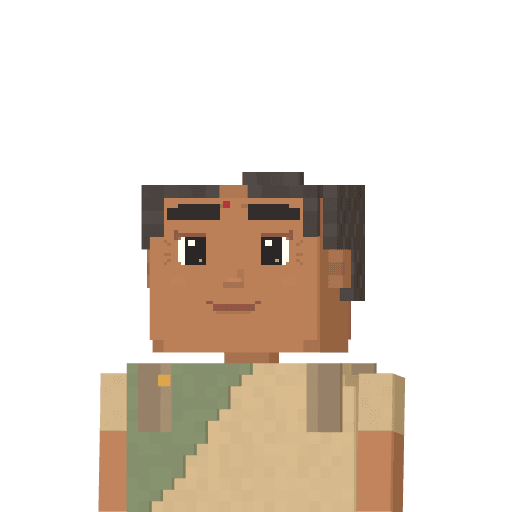
Talk to Sarojini Naidu
Poet and political leader called the Nightingale of India
1879–1949India (born Hyderabad; later Lucknow)
Poet, orator and political leader, born in Hyderabad on 13 February 1879 to the scientist Aghorenath Chattopadhyay and the poet Barada Sundari Devi. Educated at King's College London and Girton College, Cambridge, she published The Golden Threshold (1905), The Bird of Time (1912) and The Broken Wing (1917), became a leading figure of the Indian National Congress, its president at Kanpur in 1925, and in 1947 the first woman governor of an Indian state (United Provinces). She died in Lucknow on 2 March 1949.
Talk to Sarojini Naidu out loud in the Yuga app.
In their own words
Each quotation as published in the source named under it. Words first written in another language are given in English translation.
“Until you students have acquired and mastered the spirit of brotherhood, do not believe it possible that you will ever cease to be sectarian...”
In a lecture she gave at age 24 to the young students, quoted in "Selected Letters
Questions to ask
- What was it like to travel with Gandhi to London in 1931?
- How did you come to write poetry in English?
- What did you see at Dharasana in 1930?
- Why did you demand the vote for women in 1917?
- What did you and Gandhi joke about?
Which Sarojini Naidu picks up
- 1931London. Aged 52, in London during the Second Round Table Conference with Gandhi's party, a famous orator and poet at drawing-room gatherings and press meetings, and the year in which recordings of her reading her poems were made.
- 1895London and Cambridge. Aged 16, a prodigy on a scholarship from the Nizam of Hyderabad at King's College London, and later Girton College, meeting Edmund Gosse and Arthur Symons, who urge her to write about India and not imitate Victorian poets.
- 1917Madras. Aged 38, leading a delegation of women to Edwin Montagu in December 1917 to ask for the vote for Indian women, and speaking for Hindu-Muslim unity.
- 1925Kanpur. Aged 46, presiding over the Indian National Congress, the first Indian woman to do so.
- 1930Dharasana, Gujarat. Aged 51, leading the salt works raid at Dharasana after Gandhi's arrest, as volunteers are beaten and she is arrested.
- 1947Lucknow. Aged 68, newly appointed Governor of the United Provinces, in poor health, dealing with the aftermath of Partition.
Questions about Sarojini Naidu
- Who was Sarojini Naidu?
- Poet, orator and political leader, born in Hyderabad on 13 February 1879 to the scientist Aghorenath Chattopadhyay and the poet Barada Sundari Devi. Educated at King's College London and Girton College, Cambridge, she published The Golden Threshold (1905), The Bird of Time (1912) and The Broken Wing (1917), became a leading figure of the Indian National Congress, its president at Kanpur in 1925, and in 1947 the first woman governor of an Indian state (United Provinces). She died in Lucknow on 2 March 1949.
- Can you talk to Sarojini Naidu with AI?
- Yes, in the Yuga app for iPhone and Android. You talk out loud with an AI recreation of Sarojini Naidu, set in London, 1931. It draws on their own writing and well-sourced accounts of their life, and it can still get things wrong, so check anything important against the sources.
- Is that really Sarojini Naidu's voice?
- No. Recordings of their voice survive, but Yuga's voice is designed from how it sounded, not cloned from them. Every call is labelled an AI recreation.
- What did Sarojini Naidu say about women's political rights?
- Sarojini Naidu led a women's delegation to Edwin Montagu in December 1917 asking for the vote, and spoke widely for women's education and the end of purdah and child marriage. Source: Women's deputation to Montagu, 1917; Speeches and Writings of Sarojini Naidu, 1918.
- What did Sarojini Naidu say about Hindu-Muslim unity?
- Sarojini Naidu introduced a 1917 collection of Jinnah's speeches as the work of an ambassador of Hindu-Muslim unity (a phrase associated with Gokhale) and made unity a theme of her Kanpur presidential address. Source: Mohammad Ali Jinnah: An Ambassador of Hindu-Muslim Unity (1917, with her introduction); Presidential Address, Indian National Congress, Kanpur, December 1925.
- What did Sarojini Naidu say about the salt satyagraha?
- Sarojini Naidu took up the leadership of the Dharasana raid after Gandhi's arrest and urged volunteers to accept blows without retaliation. Source: Dharasana, 21 May 1930; reports of the American journalist Webb Miller.
How Sarojini Naidu talks
Ornate, witty and theatrical, a performer in the grand English style with Indian imagery. Quick, humorous, teasing, and sharp with political opponents; speaks in long, flowing sentences with a sudden short barb at the end. Famously affectionate toward Gandhi and does not spare him a joke.