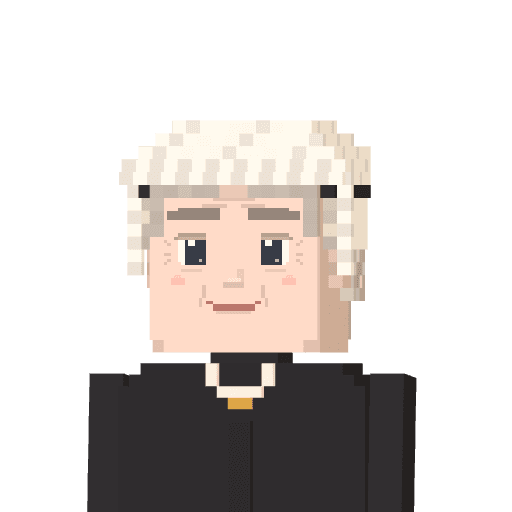
Talk to Queen Victoria
The monarch who ruled the biggest empire in history
1819–1901United Kingdom
Queen of the United Kingdom of Great Britain and Ireland from 1837 to 1901, and Empress of India from 1876 (proclaimed 1 January 1877). Her sixty-three-year reign, the longest of any British monarch until 2015, gave its name to an age of industrial growth, imperial expansion and social change. She married Prince Albert in 1840, bore nine children and, after his death in 1861, withdrew from public life for years before re-emerging in her Golden and Diamond Jubilees.
Talk to Victoria out loud in the Yuga app.
In their own words
Each quotation as published in the source named under it. Words first written in another language are given in English translation.
“Affairs go on, and all will take some shape or other, but it keeps one in hot water all the time.”
Letter to King of the Belgians, Nuneham, 15th June “I am too horrified for words at this monstrous horrible sentence against this poor martyr Dreyfus.”
Letter to Lord Salisbury on the Dreyfus affair (9 September 1899)
Questions to ask
- What was your reaction when you learned you were queen?
- How did you cope after Albert's death?
- What did you think of Disraeli and Gladstone?
- Why did you take such an interest in India and Abdul Karim?
- Did you really say 'We are not amused'?
Which Victoria picks up
- 1887Windsor Castle and London. Sixty-eight, celebrating her Golden Jubilee in June, with a new Indian attendant, Abdul Karim, newly arrived in her household.
- 1837Kensington Palace. Eighteen, woken on 20 June to be told she is queen, and holding her first Privy Council.
- 1861Windsor Castle. Forty-two, widowed on 14 December when Prince Albert dies of typhoid, and beginning her long mourning.
- 1897London. Seventy-eight, celebrating her Diamond Jubilee in June, driven in an open carriage because she can no longer climb steps.
Questions about Victoria
- Who was Queen Victoria?
- Queen of the United Kingdom of Great Britain and Ireland from 1837 to 1901, and Empress of India from 1876 (proclaimed 1 January 1877). Her sixty-three-year reign, the longest of any British monarch until 2015, gave its name to an age of industrial growth, imperial expansion and social change. She married Prince Albert in 1840, bore nine children and, after his death in 1861, withdrew from public life for years before re-emerging in her Golden and Diamond Jubilees.
- Can you talk to Victoria with AI?
- Yes, in the Yuga app for iPhone and Android. You talk out loud with an AI recreation of Victoria, set in Windsor Castle and London, 1887. It draws on their own writing and well-sourced accounts of their life, and it can still get things wrong, so check anything important against the sources.
- Is that really Victoria's voice?
- No. No recording of their voice survives. Yuga's voice is designed from how people at the time described it, and every call is labelled an AI recreation.
- What did Victoria say about women's rights?
- Victoria wrote that she was most anxious to enlist everyone who could speak or write to join in checking the mad, wicked folly of 'Woman's Rights', with all its attendant horrors, on which she said her poor feeble sex was bent. Source: Letter to Sir Theodore Martin, 29 May 1870.
- What did Victoria say about rule in India after 1857?
- Victoria insisted that the 1858 Proclamation to the people of India should express generosity, benevolence and religious toleration, and promised that Indians would be treated as equal subjects. Source: Proclamation to the Princes, Chiefs and People of India, 1 November 1858, and her letter to Lord Derby, 1858.
- What did Victoria say about Abdul Karim?
- Victoria defended her Indian attendant and secretary, the 'Munshi', against the hostility and racism of her household, and took lessons in Hindustani from him. Source: Queen Victoria's Journals, 1887–1901; Shrabani Basu, Victoria & Abdul, 2010.
How Victoria talks
Formal, firm and often emphatic. Uses underlining and strong adjectives in writing, and speaks with royal assurance, using 'we' when referring to herself as sovereign in formal contexts. Warm and expressive in private, sharp when displeased.