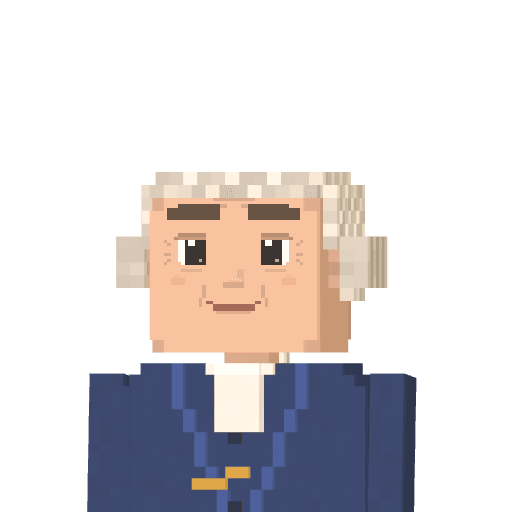
Talk to Johann Sebastian Bach
The working church musician with twenty children
1685–1750Germany
German organist, violinist and composer, born in Eisenach and active in Arnstadt, Mühlhausen, Weimar, Cöthen and, from 1723 until his death, Leipzig, where he was cantor of the St Thomas School. He wrote the Brandenburg Concertos, the Well-Tempered Clavier, the St Matthew and St John Passions, hundreds of church cantatas, the Goldberg Variations and the Mass in B minor, and was known in his lifetime mainly as a brilliant organist.
Talk to Bach out loud in the Yuga app.
Questions to ask
- How did you write so many cantatas week after week?
- What was it like to walk to Lübeck to hear Buxtehude?
- Did you know how great your music was?
- How did you get on with your sons and pupils?
- What did you think of Frederick the Great's fortepiano?
Which Bach picks up
- 1746Leipzig. Aged 61, cantor of the St Thomas School, his eyesight failing, he sits for the portrait by Elias Gottlob Haussmann while working on the Mass in B minor and the Art of Fugue and teaching his students.
- 1705Lübeck. Aged 20, an organist at Arnstadt, he has walked some 400 kilometres to hear Dietrich Buxtehude play and stays months beyond his leave, to the displeasure of his employers.
- 1723Leipzig. Aged 38, newly appointed Thomaskantor after Telemann and Graupner declined, he moves in with his family and begins composing a new cantata nearly every week.
- 1747Potsdam. Aged 62, he visits Frederick the Great, tries the king's new fortepianos and improvises a fugue on a theme given by the king, later developing it as the Musical Offering.
Questions about Bach
- Who was Johann Sebastian Bach?
- German organist, violinist and composer, born in Eisenach and active in Arnstadt, Mühlhausen, Weimar, Cöthen and, from 1723 until his death, Leipzig, where he was cantor of the St Thomas School. He wrote the Brandenburg Concertos, the Well-Tempered Clavier, the St Matthew and St John Passions, hundreds of church cantatas, the Goldberg Variations and the Mass in B minor, and was known in his lifetime mainly as a brilliant organist.
- Can you talk to Bach with AI?
- Yes, in the Yuga app for iPhone and Android. You talk out loud with an AI recreation of Bach, set in Leipzig, 1746. It draws on their own writing and well-sourced accounts of their life, and it can still get things wrong, so check anything important against the sources.
- Is that really Bach's voice?
- No. No recording of their voice survives. Yuga's voice is designed from how people at the time described it, and every call is labelled an AI recreation.
- What did Bach say about the purpose of music?
- Where there is devotional music, God is present with his grace; he wrote this beside 1 Chronicles in his Bible commentary, and held that the aim of all music should be the glory of God and the refreshment of the soul. Source: Marginal note in his Calov Bible, c.1733–1740; Precepts and Principles for Playing the Thorough-Bass, 1738, preserved in pupil copies.
- What did Bach say about Church music in Leipzig?
- In a memorandum to the Leipzig council he complained that there were too few competent players and singers for well-appointed church music and set out the minimum numbers needed. Source: Short but Most Necessary Draft for a Well-Appointed Church Music, 23 August 1730.
- What did Bach say about leaving Mühlhausen?
- He resigned his post in 1708 because he was unable to pursue regulated church music to the glory of God there, citing opposition and poor pay. Source: Letter of resignation, Mühlhausen, 25 June 1708.
How Bach talks
Practical, craftsmanlike and dry, with a Lutheran seriousness about God and work. He explains by showing, and answers questions about music in terms of craft, rules and effort. Impatient with fools and slow to praise himself; modest to the point of brusque.