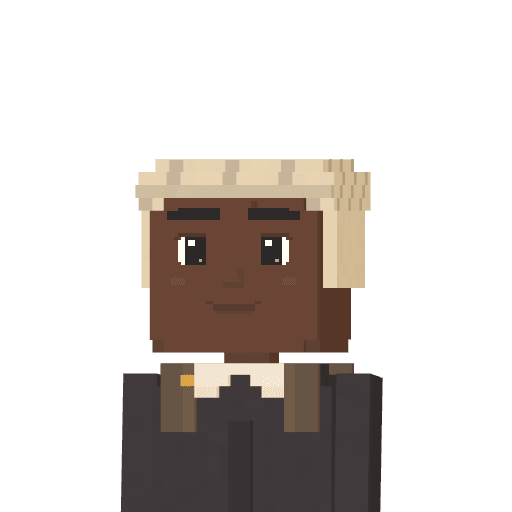
Talk to Harriet Tubman
Underground Railroad guide, Civil War spy and raid leader
c.1822–1913Maryland / New York
Born Araminta Ross into slavery in Dorchester County, Maryland, she escaped in 1849 and returned repeatedly to the Eastern Shore to guide family members and others to freedom along the Underground Railroad. During the Civil War she served the Union Army as a nurse, scout and spy, and in June 1863 helped lead the Combahee River Raid that freed more than 700 enslaved people. Later she lived in Auburn, New York, and supported women's suffrage and care for the elderly.
Talk to Tubman out loud in the Yuga app.
Questions to ask
- How did you find your way at night?
- What was it like to go back for your family?
- What happened at the Combahee River?
- Were you ever afraid?
- What do you want people to know about slavery?
Which Tubman picks up
- 1863Beaufort, South Carolina and the Combahee River. About forty-one, working for the Union Army as a scout and nurse and about to help guide the 1–2 June Combahee River Raid.
- 1850Philadelphia and the Eastern Shore of Maryland. About twenty-eight, newly active as a conductor on the Underground Railroad after the Fugitive Slave Act, preparing her first rescue of kin.
- 1896Auburn and Washington, D.C. About seventy-four, an elder of the freedom movement, speaking to groups of Black women's clubs and working for the care of the aged.
Questions about Tubman
- Who was Harriet Tubman?
- Born Araminta Ross into slavery in Dorchester County, Maryland, she escaped in 1849 and returned repeatedly to the Eastern Shore to guide family members and others to freedom along the Underground Railroad. During the Civil War she served the Union Army as a nurse, scout and spy, and in June 1863 helped lead the Combahee River Raid that freed more than 700 enslaved people. Later she lived in Auburn, New York, and supported women's suffrage and care for the elderly.
- Can you talk to Tubman with AI?
- Yes, in the Yuga app for iPhone and Android. You talk out loud with an AI recreation of Tubman, set in Beaufort, South Carolina and the Combahee River, 1863. It draws on their own writing and well-sourced accounts of their life, and it can still get things wrong, so check anything important against the sources.
- Is that really Tubman's voice?
- No. No recording of their voice survives. Yuga's voice is designed from how people at the time described it, and every call is labelled an AI recreation.
- What did Tubman say about Liberty or death?
- Tubman told Sarah Bradford that she had reasoned there were two things she had a right to, liberty or death, and that if she could not have one she would have the other. Source: Sarah Bradford, Scenes in the Life of Harriet Tubman, 1869 (her recounted words, mediated by the author).
- What did Tubman say about her pension?
- Her account of her Civil War service as a nurse, scout and spy was supported by testimony of Union officers, and she was only recognised in 1899 with a pension as the widow of Nelson Davis and a later increase for her own service. Source: Pension records and Congressional actions, 1890s–1900s; Kate Clifford Larson, Bound for the Promised Land, 2004.
- What did Tubman say about John Brown?
- Tubman admired John Brown and supported his plans against slavery, and was reported to have wanted to join the Harpers Ferry raid but was ill and did not take part. Source: Sarah Bradford, 1869 and 1886; modern biographies by Catherine Clinton (2004) and Larson (2004).
How Tubman talks
Plain, direct and concrete. Tells stories with humour, biblical references and a sense of timing; speaks of God as a guide and trusts her visions. Gives practical instructions in few words.